
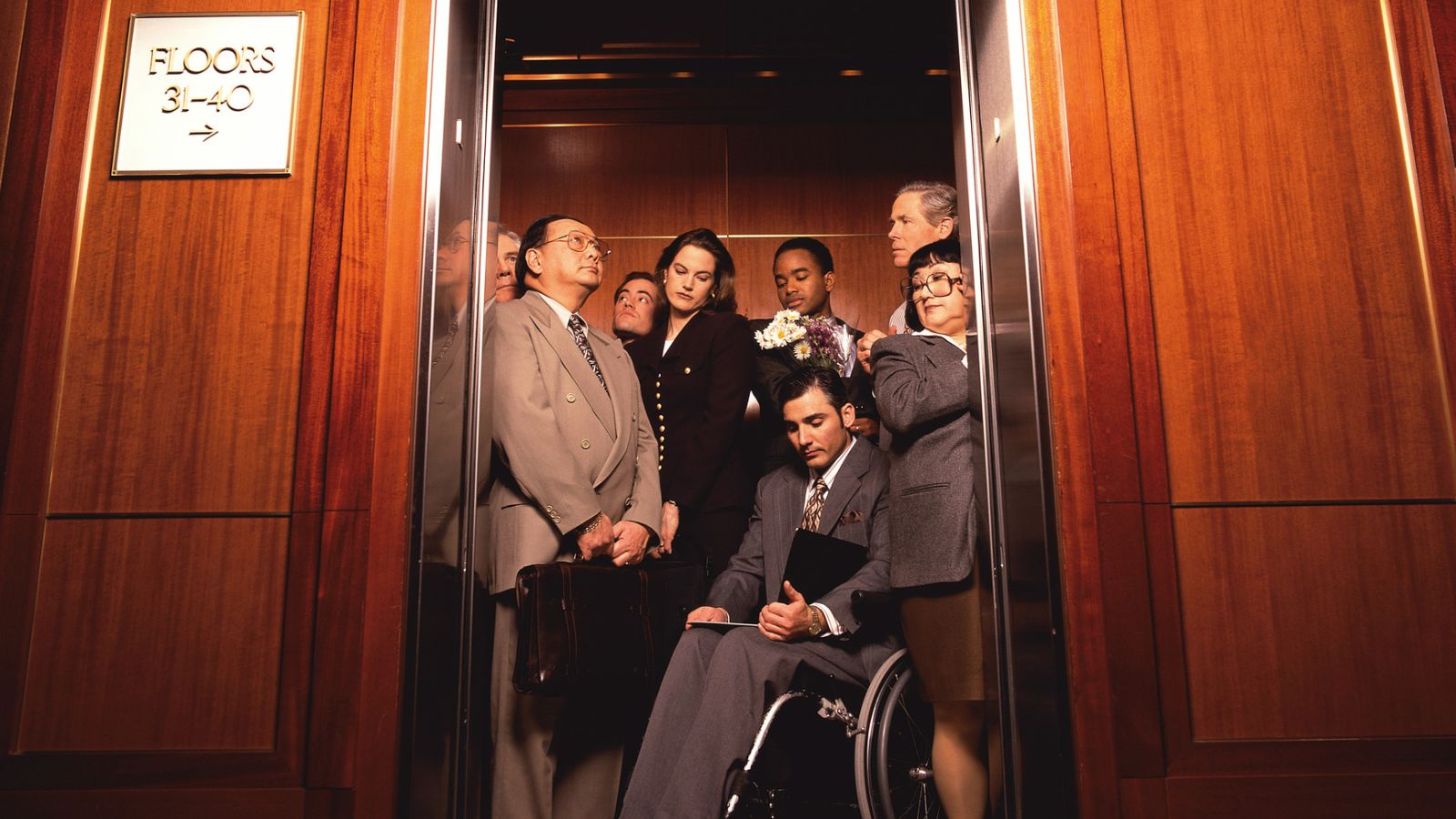
Elevator or lift access in short-term rentals is a significant concern that can deter individuals with mobility issues. Dealing with this critical gap can offer guests a smoother, more satisfying stay and expand a property’s market scope.
In this article, we detail 11 key strategies for enhancing elevator accessibility in short-term rentals.
The Issues with Elevator Access in Short-Term Rentals
- Compliance with Accessibility Laws: Rental properties, particularly short-term rentals, are required by law to maintain accessible design for people with disabilities. Many buildings equipped with elevators often fail to meet the standards set by accessibility laws, such as the Americans with Disabilities Act (ADA). Examples of non-compliance could range from having small elevator cars that are not suitable for wheelchair users to inaccessible button panels. Regular checks and modifications must be made to evade legal repercussions and to provide a barrier-free environment for all guests.
- Operational Concerns: In the realm of short-term rentals, operational issues with elevators can pose significant concerns. Elevators, similar to other machinery, are prone to breakdowns and malfunctions. When this happens, it can result in substantial inconvenience for renters, particularly those situated on higher floors or those with mobility limitations. For instance, a family that rented a 10th-floor apartment might be left stranded due to an unexpected elevator failure.
- Maintenance Expense: The costs associated with maintaining an elevator in short-term rentals are quite high. From routine check-ups to necessary repairs and replacements, these charges add up, impacting the profitability of the rental business. In addition, failure to maintain the elevator properly could lead to more expensive, large-scale repair tasks or even complete replacement, situations that operators would likely want to avoid.
- Liability and Insurance Implications: Elevator malfunctions can result in accidents, posing a risk to the safety of renters. From small incidents like sudden stops causing minor injuries to more severe situations where safety mechanisms fail, these situations can make rental operators liable for harm. As a result, rental properties with elevators often face higher insurance premiums, adding another layer of cost to business operations.
- Issues of Security: Short-term rentals deal with a constantly rotating roster of guests, which can potentially lead to security issues. Without appropriate access control measures in place, any guest can use the elevator to enter non-designated floors or private spaces. For instance, a guest might access resident-only areas, leading to privacy concerns. It is essential for rental operators to ensure stringent and effective security measures are in place in their elevator systems.
- User-Friendliness: Ultimately, elevators in short-term rentals should be user-friendly. Small details such as confusing button panels, a lack of multilingual instructions, or unclear floor markings can easily frustrate guests, negatively impacting their overall experience. For example, foreign guests may struggle to understand elevator instructions if they are only provided in one language. Hence, to ensure everyone’s comfort and understanding, operators should consider the needs of all guests in their elevator design and operation.
11 Key Strategies for Enhancing Elevator Accessibility in Short-Term Rentals
1. Regular Preventive Maintenance
Make sure the elevators on your property undergo regular preventive maintenance. This includes checking all parts of the elevator system, from doors to cables, and making necessary minor repairs quickly before they result in complete breakdowns. This strategy not only improves the reliability of the elevator but also impacts the safety and satisfaction of your guests. Ideally, you should have a contract with a trusted elevator service company and they can schedule maintenance visits automatically.
2. Compliance with Accessibility Laws
Make sure your elevator complies with all necessary accessibility laws, such as the Americans with Disabilities Act (ADA). Features such as Braille buttons and sufficient elevator car space for wheelchair users are mandatory under these laws. A visit from an ADA consultant or a certified access specialist can help you not only comply with legal requirements but also go beyond them to create a truly inclusive environment.
3. Effective Communication
Label each floor and elevator controls clearly to avoid confusion. For a global clientele, consider including multilingual signs, audio cues, and floor numbers in different formats (Arabic numerals, Roman numerals, etc.) depending on the diversity of your guests. Be sure to post clear instructions for what to do in case of an elevator malfunction or emergency; this instills confidence in your guests about their safety.
4. Installation of Surveillance Cameras
Install surveillance cameras in your elevators to enhance security. Surveillance cameras serve multiple purposes, including deterring crime, resolving disputes, and providing an added sense of safety for your guests. However, be sure to comply with local laws and privacy regulations when installing these cameras, and make it clear to all guests that they are under surveillance for their own security.
5. Advanced Booking Systems
Implement advanced booking systems that can integrate with elevator controls. These systems can automatically program guest access cards or key fobs for use only for the duration of their stay and only for access to their assigned floor and communal areas. This secure system enhances both the safety of guests and the efficiency of the rental process, as it eliminates the need for manual key handover.
6. Installation of Voice Announcement Systems
Voice announcement systems can be a valuable addition to the elevators in your short-term rentals. They can announce floors and provide other relevant information or instructions, aiding those who have visual impairments, cannot read, or don’t understand the local language.
7. Redundancies for Power Failures
Elevators should have emergency systems in place in case of a power failure. Battery backups and emergency generators can ensure the elevator returns safely to a designated floor and opens the doors, even during a blackout. Inform guests about the presence of these systems for their peace of mind.
8. Regular Cleaning and Sanitation
Maintain high standards of cleanliness in your elevators. Given your clientele’s diversity, cleanliness can significantly influence their perception of your property. The recent health crisis has further highlighted the importance of regular sanitation of frequently touched surfaces like elevator buttons and railings.
9. Invest in Modernization
Invest in modernizing old elevators on your property. Advanced technology can make the elevator more efficient, safer, comfortable, and user-friendly. Given the competitive nature of the short-term rental market, modernized elevators can set your property apart and increase customer satisfaction.
10. Comprehensive Insurance Coverage
Make sure that your insurance coverage includes elevator accidents. Though you may undertake extensive measures to ensure the safety of your elevators, accidents can still happen. Having comprehensive insurance coverage transfers the financial risk from you to the insurance provider in case of any mishap.
11. Customer Feedback
Regularly seek customer feedback regarding their experience with the elevator. This feedback can provide valuable insights into what’s going right and what needs improvement. Customer feedback might contain details that regular maintenance teams or staff may overlook. Use this feedback to make your property more welcoming and inclusive.
Understanding the Legal Requirements for Accessible Elevators
- Compliance with the Americans with Disabilities Act (ADA): The ADA, signed into law in 1990, requires that all public accommodations, including elevators, must be accessible to people with disabilities. This means that buildings with elevators need to adhere to specific guidelines to maintain accessibility. For instance, elevator buttons ought to have Braille and raised numbers so that those who are visually impaired can use them.
- Appropriate Elevator Sizes: According to the ADA, an elevator must have enough space to accommodate a wheelchair. The minimum required space is 36 inches wide by 54 inches deep. However, the rule also specifies a larger elevator size (60 inches wide by 60 inches deep) that is regarded as the standard to accommodate more people.
- Elevator Door Time Delay: The ADA prescribes minimum times that elevator doors must remain fully open to allow individuals with disabilities sufficient time to board or exit. This helps prevent doors from closing on walkers, canes, crutches, or wheelchairs.
- Visible and Audible Signals: Elevators must include both visible and audible signals for stops at a passenger’s floor. This is to aid those who are hard of hearing or visually impaired. The audible signal should produce a distinct sound for each floor to assist blind users, and the visual signal should appear near the hall call button to benefit those with hearing challenges.
- Accessible Elevator Controls: Controls in an accessible elevator need to be placed at a certain height, no higher than 48 inches from the floor, so that they are reachable by individuals in wheelchairs.
- Emergency Features: All elevators must have an emergency communication device, typically a two-way intercom or phone, within the cabin. In addition, the floor of the elevator cab must be fitted with emergency stop and alarm buttons reachable from the floor by a passenger who might fall or be sitting.
- Maintenance of Accessible Features: Building owners are responsible for maintaining the accessible features of the elevators. This includes regular check-ups and prompt repairs if issues are found. A broken Braille feature or a malfunctioning open-door delay can quickly make an elevator non-compliant and a potential liability.
Implementing Elevator Access: Planning and Retrofitting
Implementing accessibility in elevator planning and retrofitting is vital to ensuring inclusivity. This often starts at the blueprint stage in new construction, considering necessary design elements like appropriate elevator sizes and convenient control placements. Client demographics, building usage, and local regulations inform such decisions during the planning phase. To exemplify this, a residential building targeting elderly populations might necessitate additional accessibility features, such as voice-activated controls.
In retrofitting scenarios, assessing the current state of the elevator is vital before implementation. Adjusting door delay times can be a simple task, but more extensive changes might potentially require a complete overhaul. For example, increasing the size of an existing elevator to meet ADA standards might involve structurally modifying the building. Experts like architects and accessibility consultants can play crucial roles in evaluating what is feasible and compliant.
Integrating up-to-date technology, like readable screens for visually impaired people or elevators responding to smartphone prompts, can also greatly enhance accessibility. And since maintenance is equally critical, facilities need a proper maintenance plan to maintain accessible features, such as regular checks and immediate repairs.
Maintenance and Regular Checks: Ensuring Continuous Elevator Operation
Maintenance and regular checks are critical to guaranteeing seamless elevator operation, especially when accessibility features are at stake. These actions, often guided by a clearly defined and proactive maintenance plan, can range from the simple and periodic—such as ensuring braille markings are perceptible and not worn down—to complex duties that require professional technicians.
For instance, verifying the operational efficiency of complex systems like door time delays or emergency communication devices so that they’re in adherence to ADA guidelines. To both anticipate and react to maintenance issues, regular checks should be carried out. For example, the silent operation of an elevator might signify that audible signals aren’t working, impacting the visually impaired.
A robust tracking system, documenting all inspections and repairs, can be instrumental for managing scheduled assignments, addressing sudden malfunctions, and demonstrating adherence to regulations during inspections. Therefore, maintaining and regularly checking elevator systems not only ensures continuous operation and fulfills the legal requirements, but most importantly, it guarantees a safe, accessible, and comfortable experience for all users.
Leveraging Technology: Smart Lifts and Access Controls
The landscape of elevator technology is shifting dramatically as innovations in smart lifts and access control systems bring new possibilities for elevating the user experience, especially for those with disabilities. In the realm of smart lifts, approaches like machine learning algorithms are being used to predict the destination floor based on passengers’ habits, significantly reducing wait and travel times.
Voice-activated controls can greatly assist individuals with mobility issues, while integrated screen readers can announce floor numbers and other essential information to the visually impaired. Meanwhile, innovations in access controls—such as keyless entry systems tied to mobile apps—allow users to summon an elevator and select their floor without ever having to press a button, a significant boon for those with physical impairments.
For example, a person with arthritis might find a keypad challenging to use, so using a mobile app eliminates that difficulty. Furthermore, these digital systems could offer better security, as illicit access can be more easily tracked and prevented. Combining these technological advancements with traditional accessibility requirements can yield an improved, inclusive, and seamless elevator experience for all demographics.
Navigating Multi-Level Properties: Incorporating Accessibility
Ensuring accessibility in multi-level properties is a vital aspect of building planning and design due to the varying needs of occupants. Comprehensive navigation through such properties necessitates not only compliant elevators but also other accessible features that create an inclusive environment. For instance, wheelchair ramps should be provided wherever there are steps, and hallways, doors, and bathrooms all require specific widths and features to accommodate wheelchair users.
Inside the elevators, ample space needs to be available for these individuals, and appropriately positioned controls make for independent operation. Moreover, signage plays a pivotal role in navigation. Providing clear, legible, high-contrast signs, potentially with braille or other tactile features, can assist visually impaired visitors or residents in locating the elevator and other key locations.
In terms of routing, a multi-level property should consider options like stairlifts for people who have difficulty with stairs but are not wheelchair users. Furthermore, good illumination is a broad concern, supporting those with limited vision and offering a sense of safety. User-friendly technology, such as digital directories and mobile phone-powered wayfinding, can deliver additional support for independent navigation.
The Significance of Clear and Inclusive Communication about Elevator Accessibility
Clear and inclusive communication regarding elevator accessibility is critical, as it informs all potential users about the availability, location, and operation of accessible features. Properly describing these can help individuals with disabilities plan their journeys within buildings, giving them confidence in the property’s navigability.
Take elevator signage as an example: Relatable, easy-to-understand, accessible information directs users to the appropriate lifts and can explain features like door time delays or Braille numberings. Moreover, digital notifications, such as mobile apps providing real-time elevator status, can preemptively inform users about any outages or issues, enabling re-routing when necessary. Maintenance staff should be trained to communicate effectively with elevator users.
Understanding their needs and acting quickly on accessibility-related requests or problems. Consideration should also extend to wider audiences like the public, regulators, and prospective tenants, all of whom may interact differently with the property. Tailored communication for each demographic furthers transparency about the building’s efforts towards inclusivity.
Therefore, prioritizing clear and inclusive communication about elevator accessibility not only enhances usability for those with disabilities but also amplifies the property’s commitment to accessibility, ensuring all individuals feel welcomed and well-served.
Training Staff on Elevator Emergencies and Accessibility Assistance
The training of staff on elevator emergencies and accessibility assistance is critical to maintaining a prompt and appropriate response when issues arise. Comprehensive training should equip staff with technical knowledge about the functions of various accessible features, problems that could occur, and steps for immediate response.
For instance, in the case of elevator barricades, staff should know how to initiate effective emergency procedures to free trapped individuals, especially those with mobility, hearing, or visual impairments. These procedures could range from establishing communication via the elevator’s emergency system to coordinating with external emergency services.
Staff should also be trained on assisting individuals with disabilities during evacuations and re-routes. For example, ensuring those with mobility challenges are supported while using stairways or providing escorts for visually impaired individuals. Beyond dealing with emergencies, training should cover everyday assistance too, from helping wheelchair users board the elevator to aiding visually impaired users with wayfinding. Importantly, regular training updates are essential to maintain staff readiness and incorporate new knowledge or technologies.
Through such targeted training, staff become a vital resource, ensuring the smooth operation of elevators, addressing emergencies, and promoting inclusivity by providing essential assistance for those requiring it.
Ensuring Backup Solutions for Elevator Access
- Stairlifts and Ramp Installation: In case of an elevator outage, stairlifts or ramps can be used as alternative solutions. Stairlifts make multi-level traversal possible for people with mobility issues, while ramps serve as essential aids for wheelchair users. For instance, if an elevator requires extensive repairs, a user can still access other floors independently via installed stairlifts or ramps.
- Provision of Portable Ramps: Portable ramps can be a valuable backup solution, particularly in older buildings where permanent ramp installation is difficult. Staff must understand when and how to deploy these ramps to ensure safe ascending and descending, particularly during unexpected elevator outages.
- Backup Power Supplies: Elevators should have an uninterrupted power supply or generator so that they remain operational during power outages. This prevents individuals, particularly those with accessibility needs, from getting trapped inside or becoming unable to use the elevator during a power failure.
- Accessible Restrooms on Each Floor: If an elevator goes out of service, individuals with physical disabilities may be confined to one floor. Ensuring there are accessible restrooms on each floor addresses a basic human need and ensures these individuals’ comfort.
- Manual Door Operation: In some cases, if the elevator becomes non-operational while in use, staff should be able to manually operate the doors. Training staff in this area provides personnel with the skills needed to assist trapped individuals quickly and is an essential part of emergency preparedness.
- Multiple Elevator Installation: Incorporating more than one elevator can ensure continuity of access should one lift require maintenance or repairs. In larger buildings, having several elevators located at different points may also offer convenience and reduce wait times.
- Well-Implemented Maintenance Plans: A well-planned maintenance schedule can significantly minimize unexpected outages. For instance, predictive maintenance based on elevator usage patterns and regular mechanic assessments can detect potential issues before they cause any disruption.
Looking Forward: The Future of Elevator Access in Short-Term Rentals
In the world of short-term rentals, technology and legislation together are propelling us towards a future where access for all is the norm rather than the exception. With the increasing use of smart technology, the elevator is no longer merely a transport mechanism but a component of universally designed homes, underpinned by intelligent systems that personalize the user experience while promoting inclusivity.
These advancements are not confined to the realms of artificial intelligence or IoT; they also span intuitive user interfaces and personalized mobile applications that control accessibility features. For example, users can summon elevators, select floors, and notify rental owners of any issues, all from the convenience of their smartphones.
Furthermore, laws and regulations are strengthening worldwide to enforce accessibility in short-term rentals, encouraging landlords and property managers to seriously consider installations like elevators and ramps in their property design and renovation plans. This shift not only widens opportunities for individuals with disabilities, fostering independence and a sense of dignity, but also makes good business sense by appealing to a broader market demographic.
Ultimately, it paints a future where elevator access and overall property accessibility are seamlessly integrated into the short-term rental experience, enhancing comfort, safety, and equal participation for all renters.